Thanksgiving Crafts for Preschoolers: Fun & Easy Activities 🍂🖍️
Posted on November 13, 2025 · by Noah Bennett

Arts & Crafts Supplies Kits & Materials Set for Kids, Toddler - Carl & Kay
$16
https://www.amazon.com/dp/B07ZG6JY5J?tag=neuchcup-21

JOYIN Washable Tempera Paint Set for Kids 42PCS, Non Toxic Liquid Paint with 15 Brushes and 4 Palettes - Art Supply for Kids for Arts and Crafts Project, Finger Painting (2 oz Each)
$25
https://www.amazon.com/dp/B09C2P6VYF?tag=neuchcup-21

LOVESTOWN Kids Safety Scissors, 4 PCS Blunt Tip Scissor Preschool Training for Toddler & Children, Anti-Pinch Design, Child Hand Eye Coordination Development, Playdough Tools Scrapbooking Supplies
$5
https://www.amazon.com/dp/B0721MS67V?tag=neuchcup-21

Soarer Colorful Craft Rooster Feathers - 300pcs 3-5inch Colored Feathers Bulk for Kindergarten DIY Crafts,Wedding Home Party Decorations,Dream Catcher Supplies(Rooster Colorful)
$8
https://www.amazon.com/dp/B0BXJB2NTY?tag=neuchcup-21
5 Easy Thanksgiving Crafts Preschool Teachers Can Do Today That Actually Work
Main takeaway: Choose simple, repeatable projects so Creative Kids can finish a meaningful piece in 15–30 minutes. These projects build fine motor skills, gratitude, and classroom displays with minimal prep. 🎨
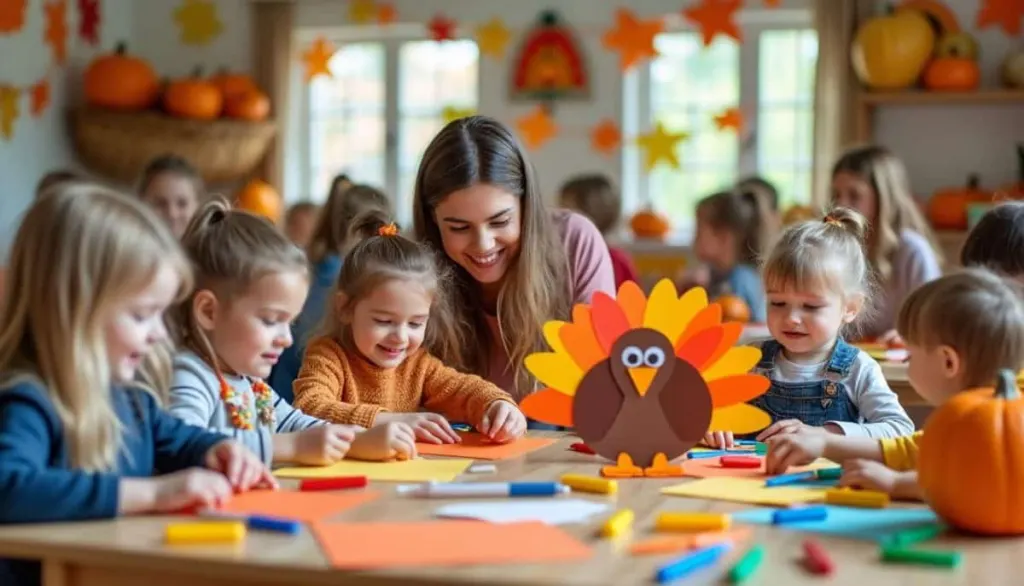
Handprint turkey keepsakes deliver instant pride and a lasting classroom gallery. Trace or paint a child’s hand, add a circle body, a paper beak, and googly eyes. Use a label to prompt “I’m thankful for…” and invite children to dictate a short phrase that an adult writes for them. This pairs craft with literacy and produces an easy take-home gift.
Paper plate cornucopia turns a single paper plate into a story of abundance. Cut a plate in half, color with crayons or tempera, glue on paper fruits and veggies, and have each child name an item they’d put in a cornucopia. This activity builds vocabulary and can be tied to a math counting moment by asking how many pieces of fruit they add.
Thankful leaf tree gets preschoolers thinking about gratitude through collage. Provide pre-cut leaves in autumn hues, and invite kids to draw or write (adult-assisted) one thing they’re grateful for on each leaf. Mount them on a classroom branch or a painted cardboard trunk. This visual reminder supports social-emotional learning and becomes a rotating exhibit for families during pick-up time. 🍂
Leaf printing with paint connects outdoor exploration with art. Collect varied leaves, brush a light coat of washable paint on the veins side, press onto white cardstock, and watch textures appear. Encourage experimentation with color mixing and overlapping prints. This activity fosters observation skills and gives a quick win for tactile learners.
Turkey feather counting game fuses math with craft. Provide a paper turkey body and numbered cards 1–10. Children attach the matching number of feathers using glue or clothespins. This practice strengthens number recognition and one-to-one correspondence while producing a colorful display piece.
Practical tips for busy teachers: Prep materials in labeled bins, create an easy-to-follow visual instruction card for assistants, and time activities in 10–15 minute stations. For more printable inspiration and ready-made templates, explore free Thanksgiving printables and a broader activity roundup at worksheet resources for preschoolers. These external templates cut prep time and increase success rates. 📌 Pin for later!
Key insight: Keep each craft predictable in sequence—trace, decorate, label—so Little Crafters feel confident and can repeat the process independently.
Math & Sensory Thanksgiving Activities for Preschool: Hands-On Learning for Early Learners Crafts
Main takeaway: Turn seasonal materials into tactile math lessons that reinforce counting, sorting, and measurement. Sensory play accelerates concept retention and calms restless learners. 🧠
Pumpkin seed sorting is an effective sensory-math bridge. Provide bowls of cleaned seeds (dyed if desired), tweezers, and small cups labeled with colors or sizes. Ask children to sort by color, then count each group aloud. The physical act of pinching seeds strengthens pincer grasp while counting develops early numeracy.
Corn kernel counting cups add tactile feedback to number recognition. Label cups 1–10 and set out scoops and dried corn kernels. Have children scoop the correct number into each cup. This controlled activity is perfect for quiet table time and is easy to set up in multiple stations for small group differentiation.
Thanksgiving sensory bin invites open-ended exploration. Use dried corn, beans, and safe autumn props like mini pumpkins, scoops, and small animal figures. Place visual cards that suggest tasks—“Find three orange items” or “Fill a cup with five scoops”—to blend sensory play with guided math challenges. Rotate the prompt cards daily to keep interest high for Playful Projects.
Feather transfer fine motor game refines hand-eye coordination. Provide plastic tweezers, a bowl of craft feathers, and turkey cutouts. Ask toddlers to transfer a specified number of feathers per turn. This short activity is perfect for transition times and builds the physical skills needed for pre-writing.
Turkey feather counting turned cooperative asks children to build a “class turkey” where each student adds a feather equal to their age or a chosen number. This fosters counting, turn-taking, and group pride. For structure, try a visual number line or a felt board to attach feathers—both techniques help preschoolers visualize quantity and sequence.
Pro setup advice: Use compartment trays to keep small items separated and a wipeable mat for easy cleanup. For sensory safety, avoid choking hazards for children under three and always supervise seed or kernel activities.
Further reading and templates with scalable ideas are available at a curated list of 25 crafts and practical classroom-ready ideas on preschool Thanksgiving crafts. Add themed table settings or quick decor references from seasonal guides like table decor tips to create an immersive room environment. 📚
Key insight: Sensory materials double as math manipulatives—plan one bin per learning objective to maximize engagement and measurable outcomes for Mini Makers Studio.
Literacy & Language-Building Thanksgiving Activities for Preschool Art Hub
Main takeaway: Use Thanksgiving themes to accelerate vocabulary, sequencing, and storytelling through short, structured activities that invite verbal participation. 🗣️
“I’m Thankful For…” drawing prompt ties emotion to language development. Present a simple sentence starter card and ask children to draw something they’re thankful for. Have an adult transcribe one sentence per drawing and display the results. This activity bolsters expressive language and gives families a meaningful snapshot of each child’s thoughts.
Turkey alphabet match supports letter recognition. Create turkey bodies labeled with uppercase letters and feathers with lowercase partners. Children match and attach feathers, then say each letter sound. This multisensory pairing of movement, touch, and sound helps phonemic awareness in a playful context suitable for Toddler Art Box sessions.
Pumpkin play-dough turkeys combine sensory fun with language prompts. As children shape turkeys, prompt them with targeted vocabulary: “roll,” “flatten,” “press,” and “decorate.” Encourage descriptive language by asking, “What colors did you use?” and “How many beads are on your turkey?” This guided conversation promotes sentence-building and vocabulary expansion.
Story sequencing cards: “From seed to feast” teach story order and cause-effect thinking. Use laminated cards that illustrate stages like planting, growing, harvesting, cooking, and sharing. Invite children to arrange cards in sequence and narrate the steps. This clear structure enhances narrative skills and comprehension while contextualizing Thanksgiving’s food cycle.
Thanksgiving vocabulary picture match supports receptive language. Lay picture cards face-up and prompt children with related words. For older preschoolers, add word cards for pairing. Celebrate correct matches to build confidence. For printable resources that align with preschool pacing, reference activity packs at craft-friendly printables and classroom-ready ideas at early learning holiday projects.
Practical classroom routine: Keep literacy activities to 10–12 minutes for attention spans and use visuals to scaffold independence. Rotate stations weekly to cover phonics, storytelling, drawing, and sensory language prompts. Invite children to present one piece during circle time to practice public speaking skills in a safe setting.
Key insight: Shape language goals into short prompts tied to creative output so every craft becomes an opportunity for vocabulary and sentence practice for Preschool Art Hub.
Group Games, STEM Challenges, and Cooperative Projects for Crafty Tots
Main takeaway: Integrate movement, teamwork, and simple experiments to cultivate problem-solving, motor skills, and social-emotional learning. These activities scale from 4 to 20 children with small adjustments. 🤝
Collaborative thankful mural turns individual expressions into a collective masterpiece. Roll out kraft paper and assign zones where each child draws or stamps something they’re thankful for. Add a timeline element: one section for family, one for food, one for friends. This communal art piece becomes a focal point for the classroom and a visual partner to discussions on gratitude.
Floating turkey STEM challenge introduces basic physics with aluminum foil and turkey cutouts. Challenge teams to design a foil “boat” that keeps a paper turkey afloat. Prompt hypothesis and testing: “Which shape will float better, a bowl or a flat sheet?” Allow 10 minutes for design, 5 minutes testing, and 5 minutes reflection. This short cycle mirrors real scientific practice and reinforces vocabulary like buoyancy and structure.
Pumpkin rolling race combines gross motor skills with cooperative cheering. Mark lanes with painter’s tape and challenge pairs to roll a small pumpkin to the finish line. Emphasize rules and turn-taking, then switch partners to build social skills. This energetic break works well before snack time to refocus active learners.
Turkey bowling can be set up with painted bottles as pins. Children count knocked-down pins and practice subtraction by asking, “How many are left?” This playful scoring practice integrates math into movement, which is ideal for kinesthetic learners.
Friendship bracelet with fall colors nurtures fine motor skills and kindness. Use pipe cleaners or yarn and beads; prompt children to make a bracelet to gift to someone and encourage them to say one kind thing while gifting. This tangible exchange teaches empathy and social rituals associated with giving.
Video demonstration: For a quick visual guide on cooperative STEM and movement-based Thanksgiving games, check a curated tutorial video search included above and classroom-ready inspiration at hands-on Thanksgiving activities. Also explore seasonal craft crossovers like pumpkin painting at pumpkin painting ideas for kids to add artistic flair to STEM tasks.
Key insight: Mix calm, table-top activities with short, energetic group challenges to maintain engagement and build both cognitive and social skills for Happy Hands Workshop.
Classroom Setup, Supplies, Safety, and Seasonal Planning for Tiny Hands Creations
Main takeaway: Plan 45–60 days ahead for curriculum integration, materials procurement, and room transformation so Early Learners Crafts are meaningful, safe, and budget-friendly. 🗓️
Start with a supply audit to determine essentials: washable paints, glue sticks, child-safe scissors, construction paper, feathers, and small manipulatives. Buy in bulk for cost savings and use labeled drawers to speed transitions. A clear visual inventory helps volunteers and assistants know where to find materials.
Budget-friendly decor and table settings can transform the learning environment without breaking the bank. Use printable banners and student art to create warmth. For table decor ideas and timelines, reference seasonal planning guides like table decor tips and family-friendly craft inspiration at DIY Thanksgiving craft resources. These references help align aesthetics with educational purpose.
Safety and accessibility come first. Keep small parts away from under-three groups and ensure all paints are non-toxic and washable. Use trays and aprons to reduce mess, and have a quick hand-washing station nearby. Differentiate tasks by offering pre-cut options for younger toddlers and open-ended materials for advanced preschoolers.
Time management strategies keep the day flowing. Plan 10–15 minute activity bursts, 5–10 minute clean-up signals, and a 20-minute group reflection or story. Use visual timers and simple songs to cue transitions. Rotate centers every week to introduce new skills while reinforcing previous ones.
Mistakes to avoid include overloading stations with too many options and skipping adult modeling. Model each step once, then scaffold. Have assistant-led stations for tricky tasks like cutting or gluing. For fresh ideas that work in real classrooms, explore classroom-ready lists at teacher-tested craft ideas and check seasonal craft collections at family-friendly preschool crafts.
Creative finishers and display tips include making a rotating “Gratitude Wall” or a take-home pocket labeled with child art. Incorporate parent engagement by inviting families to view the gallery during pick-up or via a photo share. Consider simple keepsake packaging like laminated name tags and a paper bag portfolio.
Key insight: Thoughtful planning, clear safety rules, and a rotating schedule let Tiny Hands Creations flourish while keeping teachers sane and children excited—save this as a classroom checklist and save for reference! ✔️
About the author
Noah Bennett shares practical ideas designed to work in real life.
Explore
Latest ideas
🎄 Cozy Christmas PJs: Ultimate Holiday Comfort! 🛌
🎄 Ultimate Christmas Gift Guide: Perfect Ideas for Everyone! 🎁
🎄DIY Christmas Ornaments: Fun Crafts for Every Age!✨
🎁 Office-Friendly Christmas Gifts for Coworkers 🎄