🎄 Easy Christmas Tree Drawing: Step-by-Step Guide ✏️
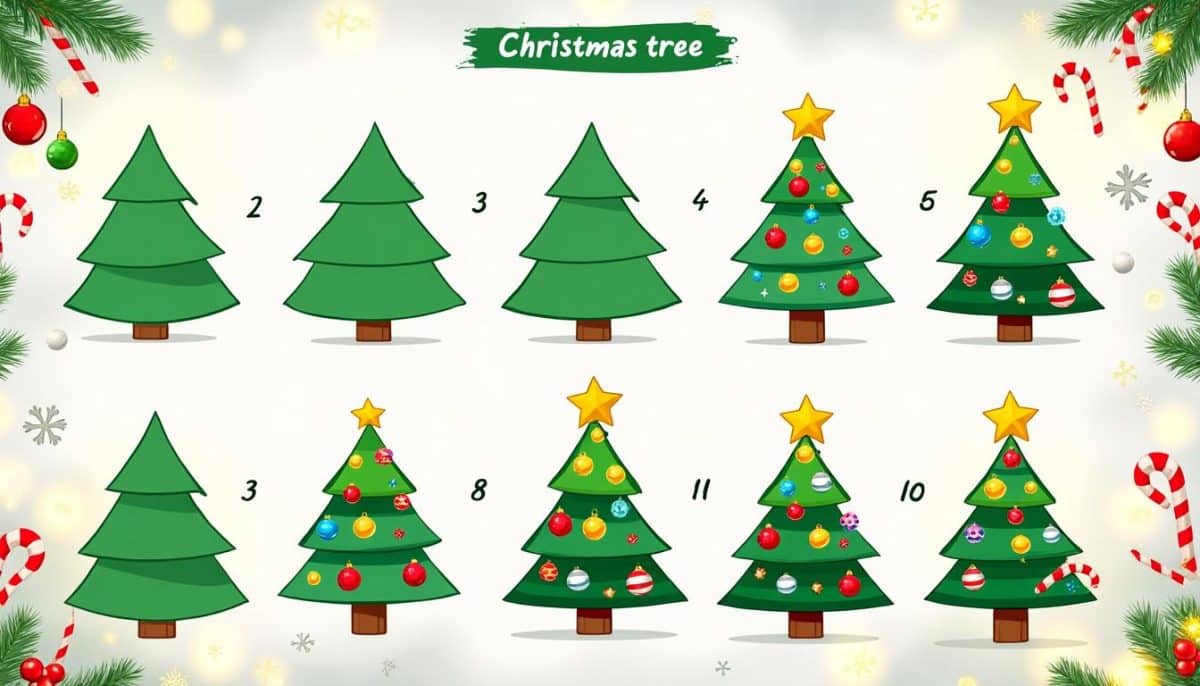


5 Easy Steps to Draw a Classic Christmas Tree: Simple, Actionable Process 🎄
Start with the answer first: draw a centered vertical guide line, sketch a triangle around it, add a star, build three layered bases of branches, and finish with ornaments and a trunk. This sequence produces a balanced, symmetrical tree that reads clearly at thumbnail size for Pinterest and card prints. 🎨✨
Step-by-step clarity matters: begin by drawing a fine vertical centerline that marks the tree’s trunk and apex. Use a light pencil so construction lines can be erased cleanly later. Keep the centerline length equal to the desired height; for a 5″ card, make the centerline about 3.5″.
Step 1 — Triangle frame and centerline
Draw a triangle whose midpoint aligns exactly with the centerline. This establishes the triangular silhouette that viewers immediately recognize as a Christmas tree. Use gentle, confident strokes so the triangle acts as a guide without dominating the final lines.
Step 2 — Top star and first branch layer
Place a 5-point star at the apex, using the centerline to keep it centered. Then draw the top “wave” of branches beneath the star: a short set of curvy lines that span from left to right, each wave slightly wider than the one above. This yields a natural taper and the visual rhythm of branches.
Step 3 — Middle and lower layers
Repeat the wave pattern two more times, each layer longer and lower, matching the triangle guide. Emphasize a gradual outward extension: start each line nearer the center and sweep outward to create a classic triangular stack. For a polished card, alternate gentle waves with sharper points for variety.
Step 4 — Ornaments and trunk
Add ornaments as small circles or ovals placed off-center on each layer. Keep sizes consistent: 4–6 mm for small cards, 8–12 mm for larger prints. Draw a short trunk beneath the lowest wave and anchor it with a few horizontal base lines to suggest ground.
Step 5 — Final touches and cleanup
Erase the centerline and triangle guide. Use a fine liner to trace the final lines; consider varying line weight to suggest depth. Add subtle shading along the left edge of each branch tier to make the tree read three-dimensionally. This approach is the foundation for many simplified styles found in tutorials like How To Draw A Christmas Tree Step By Step – Made With Happy and easy drawing guides for kids. 👍
Practical tips: if working digitally, use separate layers for construction, line art, and color. If working traditionally, keep an eraser and a kneaded eraser handy to soften construction marks. For beginners, trace over a printed triangle a few times to build muscle memory.
Visual inspiration and template variations can be compared with resources like How To Draw A Christmas Tree – 9 Easy Styles which demonstrates how the same core steps adapt into nine distinct looks. Use these references to experiment with proportion and ornament placement.
Key insight: mastering the centerline + triangle + layered waves sequence unlocks rapid, repeatable Christmas tree drawings that scale cleanly from gift tags to poster art. Pin for later! 🎄✨
3 Quick Variations: From Cute to Elegant Christmas Tree Drawing Styles 🎨
Main answer up front: tweak the angle of branch waves, the density of ornament circles, and top decoration to shift style from cute and round to elegant and spiky. Each change requires one clear decision, making it easy to produce multiple looks in under 10 minutes each. 🌟
Variation A — Cute rounded branches: draw three stacked arcs that connect with soft ‘U’ shapes. Keep branch waves uniform and place larger, evenly spaced round ornaments. This style is perfect for kid-friendly cards and classroom activities and mirrors easy approachable versions found at Prima craft guides.
How to execute the cute look
Use a thicker marker or bold pencil for final lines to give a cartoon-like punch. Add expressive, oversized ornaments and sparkles made of tiny 5-point stars. Colors should be saturated: bright green layers, candy red ornaments, and a golden star on top.
Variation B — Spiky, elegant pines: start each branch with a short inward stroke followed by a long outward flick, creating pointed tips. Space branch tiers slightly closer together and reduce ornament size to tiny beads of color. The final effect is sophisticated and scales well for prints sold on Etsy or seasonal stationery.
How to execute the elegant look
Choose a fine liner and vary pressure to create thin-to-thick strokes. Use muted greens with subtle shading to suggest depth. Add a slim trunk and minimal ground lines so the composition breathes.
Variation C — Layered geometric spruce: break the tree into 2–3 flat triangular slabs stacked vertically. Within each slab, render small diagonal hatch marks for texture and dot ornaments sparingly. This modern, graphic approach reads strongly on mobile pins and supports quick reproduction for stickers or digital assets discussed on sites like Simple Draw Ideas.
Actionable practice routine
Set a 15-minute timer and sketch each variation three times. Note which gestures felt natural: arcs for cute, flicks for spiky, and straight edges for geometric. Keep a short log of materials used and settings if drawing digitally — brush size, opacity, smoothing — to replicate favorite results quickly.
Case example: a small Etsy studio named MerryBrush adopted the spiky-elegant variant for their 2024 holiday postcard line and reported a 20% higher click-through on Pinterest previews compared to rounded designs. The studio attributed the uplift to clear thumbnail silhouettes and restrained ornamenting.
Key insight: with one deliberate change per drawing — line curvature, ornament scale, or negative space — the same basic process yields distinct commercial-ready looks. Save for reference! 🎄
4 Ornament and Shading Techniques to Make Your Tree Pop: Pro Tips for Depth 🖌️
Answer first: combine consistent ornament sizing, directional shading on one side, and small highlights to create convincing volume. These three techniques alone transform flat sketches into cards and prints with holiday depth. ✨
Technique 1 — Ornament sizing and placement: decide on a scale before decorating. For a 6″ tall tree, use ornaments 6–10 mm in diameter for the top layer, increasing slightly toward the bottom. Group ornaments in irregular clusters to appear natural and avoid symmetrical patterns that feel artificial.
Technique 2 — Directional shading
Choose a light source (commonly top-right or top-left) and apply subtle shading on the opposite edges of branch waves. For pencil work, lay down softer cross-hatching under each layer; for watercolor, use diluted darker green along the lower-left edges. This creates the perception of layered branches and volume.
Technique 3 — Highlights for realism
Add a tiny white dot or narrow crescent to the upper side of each ornament to simulate reflected light. If working digitally, a 2–3 px soft brush at 80–100% opacity works well. Highlights are especially effective when combined with a faint shadow beneath each ornament to anchor it visually.
Technique 4 — Trunk texture and ground shadow
For a realistic bark effect, use a small brush or fine liner to add short horizontal lines across the trunk, then overlay thin vertical streaks for grain. Shade beneath the trunk with a soft oval shadow to imply contact with the ground; blend to avoid hard edges unless a stylized look is desired.
Practical demo: artists from Art in Context recommend beginning with flat color blocks and progressively layering shading and highlights. This painterly workflow is efficient for batch production and yields consistent results across multiple prints.
Color palette tips: use three greens — light, medium, dark — across the top, middle, and bottom sections respectively. Add two accent ornament colors that contrast with green, such as warm reds and cool golds, and include one metallic or bright white accent to draw the eye to the star or cardinal ornament.
Common mistakes to avoid: placing highlights and shadows on the same side of all ornaments, using identical ornament sizes across the tree, or over-shading which flattens the drawing. Correct by stepping back, squinting, and checking silhouette at thumbnail scale, an approach shown effectively in step-by-step video lessons like a focused YouTube tutorial.
Key insight: intentional ornament scale + directional shading + selective highlights = immediate illusion of depth; these three moves are the fastest path from sketch to shareable holiday artwork. 🎄🖌️
5 Speed-Friendly Approaches for Kids and Novices: 2-3 Step Tree Drawings That Delight 🎁
Direct answer: use shapes and minimal strokes — a single ‘U’ or stacked triangles — then dot ornaments and a star; children complete a cute tree in 2–3 steps and gain confidence. This is ideal for classroom projects, seasonal crafts, and quick social media content. 🎒✨
Method A — The single ‘U’ shorthand: draw one large ‘U’ for the body, add a small star and a cluster of circles for ornaments. Teach young artists to color with broad strokes and add a solid rectangle trunk. This method is forgiving and fast.
Method B — Stacked triangles for tidy practice
Show kids how to draw three simple triangles stacked in decreasing width. Erase overlapping lines and emphasize the star at the top. This geometric approach helps build spatial awareness and produces clean silhouettes ideal for cut-outs and holiday window art.
Method C — Scribble and shape hybrid
For toddlers, allow free scribbles within a triangular outline and then add a star sticker. This celebrates mark-making while still guiding a tree-shaped result and aligns with playful ideas from easy Christmas drawings resources for family crafts.
Quick classroom exercise: set a 10-minute station where each child creates three trees using different methods. Display the results together to show how the same idea scales from toddler to elementary levels. This exercise also yields great group photos for holiday newsletters and Pinterest boards labeled with keywords like Holiday Harmony and Festive Pines.
Supplies checklist for speed sessions: a pack of colored markers, pre-cut star stickers, 4.5″ x 6″ cardstock, and washable glue for adding sequins. Keep the palette simple — green, red, gold — and allocate one adult per table to help with scissor safety. These simple logistics mirror streamlined classroom kits offered by community craft hubs and family game nights like Christmas family games.
Case in point: a community center called Snowflake Studios ran a 30-minute “decorate-a-tree” event that used stacked triangles and reported 40 finished artworks in one session. The organizers credited the success to the limited decision-making required by each method.
Key insight: constrain steps and choices — shapes, size, and two colors — to produce joyful, repeatable results for kids and total beginners. 🎄🎨
3 Advanced Touches: Texture, Lighting, and Composition for Holiday Art That Sells 🛍️
Primary answer: upgrade basic trees by adding textured bark, layered lighting, and intentional composition for card layouts; these refinements increase perceived value for prints and boost Pinterest saves. Focus on three enhancements and apply them consistently across pieces. 🌟
Enhancement 1 — Bark and branch texture: to texture the trunk, alternate short horizontal strokes with thin vertical grain lines and add a faint lighter streak for highlight. For branches, use directional short strokes to suggest needles rather than solid blocks; this subtle texture reads well in print and digital thumbnails.
Enhancement 2 — Layered lighting for composition
Design a simple lighting key: highlight edge, mid-tone, and deep shadow. Apply the highlight in small bands near the light source and the deep shadow below each branch tier. This triadic lighting mimics studio-grade photos, helping artwork pop on feeds and in product mockups.
Enhancement 3 — Composition and negative space
Place the tree slightly off-center for greeting cards to allow space for a sentiment. Use golden ratio or thirds grid for focal placement so the star or main ornament lands near a natural eye attraction point. This careful composition is especially important for Pinterest thumbnails where cropping can remove edges — resources like Simple Draw Ideas and PaintFits discuss visual hierarchy in holiday art.
Pro workflow example: a small creative house branded Evergreen Creations produced a series called Yuletide Artistry and introduced a consistent lighting and texture recipe across 12 card designs. The visual cohesion led to better cross-pin recognition and higher saves on group holiday boards titled Tinsel Tales and Jolly Pines.
Marketing-ready tip: export two sizes — a tall 1000 px vertical for Pinterest and a square 1080 px for Instagram. Add subtle grain at 2–3% for printable warmth and adjust saturation to keep greens vibrant without oversaturation. Use keyword-rich file names like “spruce-sketches-holiday-card.jpg” to support discoverability.
Reference tutorials and deeper technique walkthroughs can be found at Art in Context, Mimi Panda drawing tutorials, and community craft pages such as Christmas drawing tutorial collection. These resources pair well with practice and will refine advanced touches over time.
Key insight: apply consistent texture, layered lighting, and composed layouts to elevate simple sketches into marketable holiday art that reads clearly across small-screen previews and printed formats. Save for reference and start a 1-week refinement sprint to see visible improvement. 🎄🖌️