🎄 Snap Perfect Christmas Pics: Top Photography Tips 📸
Posted on November 19, 2025 · by Mason Lee
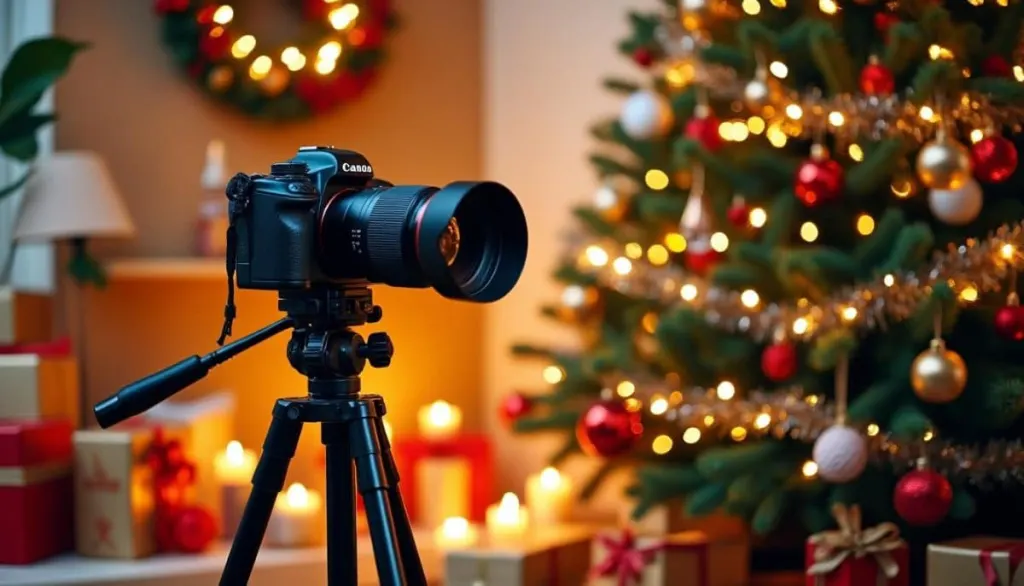

Amazon Basics 50-inch Lightweight Portable Camera Mount Tripod Stand with Bag, for Travel Photography, Champagne
$15
https://www.amazon.com/dp/B00XI87KV8?tag=neuchcup-21
1. 5 Easy Golden Hour Lighting Tips for Christmas Photography That Actually Work 🌅
Main point: Shoot during the golden hour around sunrise or sunset to make Christmas lights and decorations glow with warm, natural colour for instant festive impact. This choice yields the biggest visual return for minimal extra gear.
Why this matters: lighting defines mood faster than any other setting. For holiday scenes, soft golden light reduces harsh shadows, enhances skin tones, and makes bulbs and tinsel look luminous without chasing extreme exposures. Start with the decision to work the hour before sunset or the hour after sunrise and structure the rest of the shoot around that window.
How to execute: set the schedule first, then prepare the setup. Arrive 20–30 minutes ahead to scout angles and place props. Use a tripod to maintain sharpness as the light fades and avoid motion blur when aperture narrows. For handheld work, a lens with image stabilization helps, but tripod use is preferred for consistent framing.
Practical camera settings that work reliably: choose a base of ISO 100–400 in bright golden hour scenes to retain clarity. Use aperture around f/2.8–f/5.6 when photographing ornaments on the tree to balance subject sharpness and background glow. If the scene includes people, pick a shutter speed that freezes motion — usually 1/125s or faster for adults, faster for kids in motion.
Real example: Maya, a fictional neighborhood content creator, planned a 30-minute window to photograph a street of decorated houses. She set a tight sequence: 10 minutes for wide exterior compositions, 10 minutes for close-ups of ornaments catching the low sun, and 10 minutes for portraits in front of the brightest display. The disciplined timing produced a consistent set of images that required minimal editing.
Styling and composition tips during golden hour: face subjects so the golden light hits at a 45-degree angle for flattering facial modelling. Place decorations in the midground to catch highlights and produce natural sparkles. For streetscapes, use leading lines like sidewalks or rows of lampposts to draw viewers into the scene.
Common mistakes to avoid: shooting too late and losing the golden warmth, overexposing highlights from holiday lights, or neglecting to switch lenses for different focal lengths. Prepare backups — charged batteries and spare memory cards — so the light window never goes to waste.
Results and quick adjustments: if the image looks flat, slightly raise the exposure compensation and add a warm white balance shift. If the background lights blow out, reduce exposure and rely on shadow recovery in RAW processing. Save one or two bracketed frames (±1 stop) for high-contrast scenes to ensure at least one balanced file.
Pin for later! Save this quick checklist: time slot, tripod, ISO baseline, aperture, shutter target, backup battery. These six items are the golden-hour essentials that will transform Christmas Photography from decent to captivating. 🎄
2. 5 Clever Bokeh and Light Painting Techniques for Festive Backgrounds ✨
Main point: Use a wide aperture and creative light sources to produce dreamy bokeh and playful light trails that turn holiday lights into artful backgrounds. These techniques add a handcrafted look ideal for Pinterest-style images.
Why it works: festive lights are already visually attractive; altering focus and motion transforms them into a textured backdrop, directing attention to the subject while preserving atmosphere. Bokeh reduces clutter and emphasizes the subject, while light painting introduces motion and uniqueness.
Step-by-step bokeh setup: mount a lens capable of f/1.8–f/2.8, place the subject 3–6 feet from the string lights, and set the lights 6–12 feet behind the subject. Focus on the subject with a single-point AF, then switch to manual focus and slightly defocus to increase bokeh size if needed. For shaped bokeh, cut a small cardboard disc with a star or heart and place it over the lens — this creates festive-shaped highlights.
Light painting basics: set the camera on a tripod, choose a long exposure between 5–15 seconds, and use a small handheld light or sparkler to draw shapes behind or around the subject. Keep the subject still or ask an assistant to stand in as the model for safety. Use low ISO (100–400) and a narrow aperture if the goal is bright, clean trails; widen the aperture for softer trails with more ambient exposure.
Practical safety and styling notes: when using sparklers, maintain distance from decorations and clothing. Use gloves and have water nearby. For indoor light painting, LED fairy lights on stick handles are an effective, safe alternative to sparklers and provide controllable color temperature.
Examples to copy: create a portrait where the subject holds a wrapped gift while a helper waves a light wand around the edges to add motion; or photograph a tabletop scene with ornaments in sharp focus and tree lights as dreamy spheres behind them. Both approaches elevate ordinary scenes into shareable, standout visuals.
Post-processing suggestions: increase local contrast slightly to make bokeh pop, and add a subtle glow by boosting highlights and adding a gentle vignette to centre the composition. For light painting, layer two exposures in processing to fine-tune balance between subject and trails.
Tools and alternatives: if a wide-aperture lens is not available, use the lens’ widest aperture and move subject farther from background lights. A smartphone with portrait mode can simulate bokeh, and clip-on shaped bokeh filters are a low-cost option for experimentation.
Save for reference! A quick gear list: f/1.8 lens, tripod, LED wand or sparklers, shaped bokeh filter, remote shutter. These five items unlock creative background effects that will make Christmas Photography pop on holiday feeds. 🎁
3. 5 Simple Portrait & Family Photography Tips for Natural Holiday Moments 👪
Main point: Capture authentic expressions by prioritizing candid action, early group photos, and simple composition with a clear focal point to avoid busy holiday scenes.
Why this matters: portraits and family shots are the emotional core of Christmas Photography. When photos feel natural, they become keepsakes. The single best change is to shoot group portraits early in the event when energy is high and faces are fresh.
Start with logistics: designate a portrait zone—a corner with soft window light or a well-lit backdrop. Leave a small props box with Santa hats and simple decorations to encourage playful poses. Ask one family member to act as an assistant to gather people for scheduled short bursts of shooting.
Camera settings for portraits: use aperture between f/2.8 and f/5.6 for flattering subject separation. For children or moving groups, set shutter speed to at least 1/250s or use Burst mode to capture fast expressions. Use AF-C (continuous autofocus) for moving subjects and single-point AF for static portraits to ensure the eyes are sharp.
Posing approach that looks candid: direct with short, specific prompts rather than stiff commands. Ask subjects to whisper a joke, unwrap a small gift, or lean into each other. These micro-actions yield genuine smiles and dynamic interactions that communicate the holiday story better than formal poses.
DIY photo booth strategy: build a portrait zone with a simple backdrop (velvet curtain or paper roll), string lights, and a stool. Use a remote or timer and encourage guests to take turns; the result is a stream of personality-driven portraits. Keep session time to 2–3 minutes per person to maintain momentum and prevent boredom.
Group photo timing and composition: take group shots at the beginning of the gathering while everyone still looks presentable. Arrange groups in tiers—seated front row, standing middle, elevated back—so faces form a natural triangle for the eyes to follow. Use a wider aperture (f/4–f/8) to keep the whole group in focus depending on distance.
Handling low light indoors: bounce or diffuse flash where possible. If a flash is unavailable, open the aperture wider, raise ISO to 800–1600, and stabilize the camera with a tripod. Avoid harsh frontal flash; instead, bounce off ceilings or use softbox diffusion to keep skin tones pleasant.
Editing and selection workflow: pick the best candid frame first, then identify a couple of posed keepers. Triage quickly by choosing photos with clear focal points and unambiguous emotion. For final edits, add warmth, subtly enhance eyes, and correct white balance to maintain consistent skin tones across the holiday album.
Save for later! Keep a short checklist near the portrait zone: remote, stool, props box, assistant, battery pack. These simple elements reduce friction and help produce timeless family portraits that serve as the emotional centre of any holiday gallery. 🎄
4. 5 Festive Still Life, Decorations & Composition Tricks for Pinterest-Worthy Christmas Photos 🎨
Main point: Treat holiday decorations and food as styled subjects—control background, texture, and small details to create images that invite saves and pins.
Why focus on still life and decorations: these shots are highly shareable and evergreen for platforms like Pinterest. A single well-styled ornament or a tray of Christmas cookies can generate high engagement if composition and lighting are thoughtfully executed.
Styling basics: choose a clean background—neutral fabrics or simple wood surfaces work best. Introduce texture with twine, pinecones, and ribbon to guide the viewer’s eye. Keep the colour palette tight: two dominant colours plus one accent. This controlled approach avoids visual noise and strengthens the composition.
Macro and close-up techniques: use a macro lens or the close-focus setting to capture details like glitter on ornaments or sugar crystals on treats. Set aperture to f/2.8–f/5.6 for a shallow plane of focus that highlights texture while softening the surroundings. Move slowly and shoot multiple angles to find the most evocative detail.
Composition rules to apply: use the rule of thirds for balance, and introduce leading lines (ribbons, garlands) to draw attention toward the main subject. Negative space can be powerful—leave breathing room around a plate of cookies to create a lifestyle look suitable for recipe pins and product-style images.
Props and budget-friendly swaps: use thrift-store plates, printed paper backgrounds, or recycled wrapping paper to create variety without high expense. For seasonal inspiration and theme ideas, consult creative resources like creative Christmas photo ideas and Christmas photoshoot ideas for fresh concepts.
Food styling quick tips: arrange food in odd-numbered groupings (3 or 5) for natural balance. Use a spray bottle to add shine to fruits and glossy finishes. For pastries and cookies, capture one incomplete bite to add narrative—this invites viewers to imagine the taste and sparks engagement.
Examples of Pinterest-ready shoots: a flat-lay of decorations and a shopping list for DIY ornament upcycling, or a moody tabletop setup with a hot cocoa mug, marshmallows, and a string of lights. These images perform well because they combine composition, utility, and seasonal warmth.
Save for reference! A mini supply list to keep in the camera bag: neutral backdrop, small clamp light, reflector card, props box (ribbons, pinecones), spray bottle. These five items enable consistent, high-quality still life images that translate into saved pins and holiday clicks. 🎁
5. 5 Practical Camera Settings, Post-Processing & Workflow Tips for Holiday Shooting 🛠️
Main point: Prioritise a reliable workflow: shoot RAW, set accurate white balance, and use consistent exposure strategies to speed up post-processing and produce cohesive holiday galleries.
Why a workflow matters: the holiday season is busy; a repeatable system preserves time and quality. RAW files give maximum latitude for recovering highlights from decorative lights and adjusting white balance for mixed lighting situations common during Christmas events.
White balance strategy: if lighting is mostly incandescent, set a warmer preset or dial in kelvin around 2800–3200K for a cozy feel. For mixed natural and artificial light, use a gray card to set a custom white balance, or rely on RAW conversion to fine-tune. Correct white balance early to maintain consistent skin tones across shots.
Exposure and metering: use evaluative/matrix metering for general scenes. For tricky backlit portraits with tree lights behind the subject, apply +0.3 to +1.0 exposure compensation to keep faces properly exposed. Bracketing important frames (±1 EV) ensures a usable file when extremes are present.
ISO and noise control: modern cameras handle higher ISO well; stick to ISO 100–800 for golden hour and outdoor scenes. Indoors under dim lights, ISO 800–3200 may be necessary—use proper noise reduction in post and prefer faster lenses when possible to minimize grain.
Edit with purpose: in post-production, start by correcting white balance, then set exposure and contrast. Increase warmth slightly (by +3–8 on the temperature slider) to augment holiday glow. Use selective sharpening on eyes and ornaments and apply a subtle vignette to centre attention. Consider a light dusting of a snow or sparkle overlay for social posts to enhance the festive mood.
Archival and sharing workflow: back up all files in two locations immediately after the shoot—local drive and cloud. Tag images with keywords like Christmas, Portraits, Decorations, and Holiday so they are easy to find for cards or recipes later. Create a final folder for social edits sized to platform specs to avoid compression artifacts.
Time-saving shoot plan: schedule shoots 45–60 days ahead for any staged Christmas content that will be used for cards or seasonal campaigns. This lead time gives room for reshoots, printing, and distribution. For in-house events, set up a quick checklist: batteries, memory cards, tripods, a small LED, and a props bag.
Further learning and inspiration: explore resources for technique refreshes and creative prompts such as technical Christmas Photography tips, pro editing approaches, and community galleries on festive photography ideas. These sites provide concrete examples and sample settings to adapt to different camera systems.
Final workflow insight: set up a repeatable pre-shoot checklist and a 3-step post routine (import → cull → batch-edit). This system conserves time and ensures every memorable moment gets treated with the same professional care. Save for reference! RAW, white balance, exposure bracketing, backup, batch-edit. ✅
About the author
Mason Lee shares practical ideas designed to work in real life.
Explore
Latest ideas
🎄 Cozy Christmas PJs: Ultimate Holiday Comfort! 🛌
🎄 Ultimate Christmas Gift Guide: Perfect Ideas for Everyone! 🎁
🎄DIY Christmas Ornaments: Fun Crafts for Every Age!✨
🎁 Office-Friendly Christmas Gifts for Coworkers 🎄